
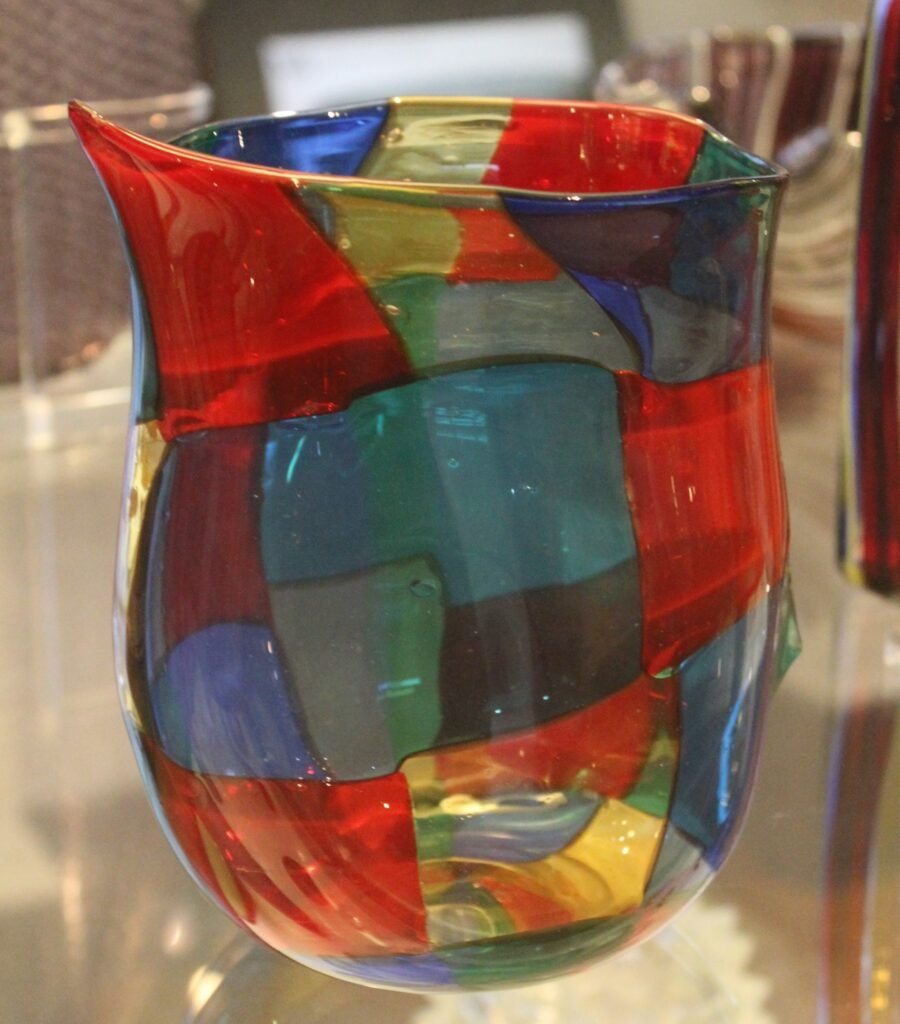
Glass collecting can begin with a £50 find in an antique shop or become a lifelong pursuit of work by internationally recognised designers. Glass is an unusual thing to collect: delicate yet durable, functional yet sculptural, cheap yet capable of making thousands at auction. For a newcomer the variety is the problem. The place to start is not a particular maker or an expensive piece, but your eye, the vocabulary, and finding out what genuinely interests you.
Decide what interests you
The easiest mistake is trying to collect everything. You buy a Murano vase, discover Scandinavian glass, then paperweights, then Victorian pressed glass, and end up with a collection that has no direction. Nothing is wrong with buying what you like, but a theme makes the process far more rewarding. It can be built around a country, a period, a manufacturer, a designer, a technique or simply a price range. You do not need to decide immediately, and it is probably better not to. Look first.
Learn to look before you learn to buy
The most useful thing a new collector can do is handle as much glass as possible: antique shops, fairs, auction viewings, museums, specialist dealers, charity shops and online catalogues. Buy nothing. Pick pieces up where you are allowed to and ask how they feel. Heavy or surprisingly light? Bubbles inside, threads, canes or slices of coloured glass? Is the surface smooth, textured or deliberately irregular? Look at the base, look at the edges, and look through the glass rather than at it. The more you examine, the faster you see differences in technique, quality and age.
The main areas of glass collecting
You do not need expertise in every area, but knowing the broad categories helps you find your own.
- Italian art glass. Murano has made glass for centuries, and its twentieth-century output covers an enormous range of techniques. Fulvio Bianconi, Dino Martens, Flavio Poli, Archimede Seguso and Carlo Scarpa are the names mid-century collectors follow.
- Scandinavian glass. Orrefors, Kosta, Iittala and Nuutajärvi combine relatively simple form with sophisticated colour and surface treatment, and there is a great deal of it about.
- British studio glass. Instead of large manufacturers you follow individual artists and the development of the studio movement.
- Victorian and Art Nouveau. Tiffany, Loetz, Gallé and Daum dominate the discussion of historical glass.
- Paperweights. Originally functional objects; the fine ones are miniature displays of extraordinary skill, full of millefiori, latticinio and encased flowers.
Italian art glass
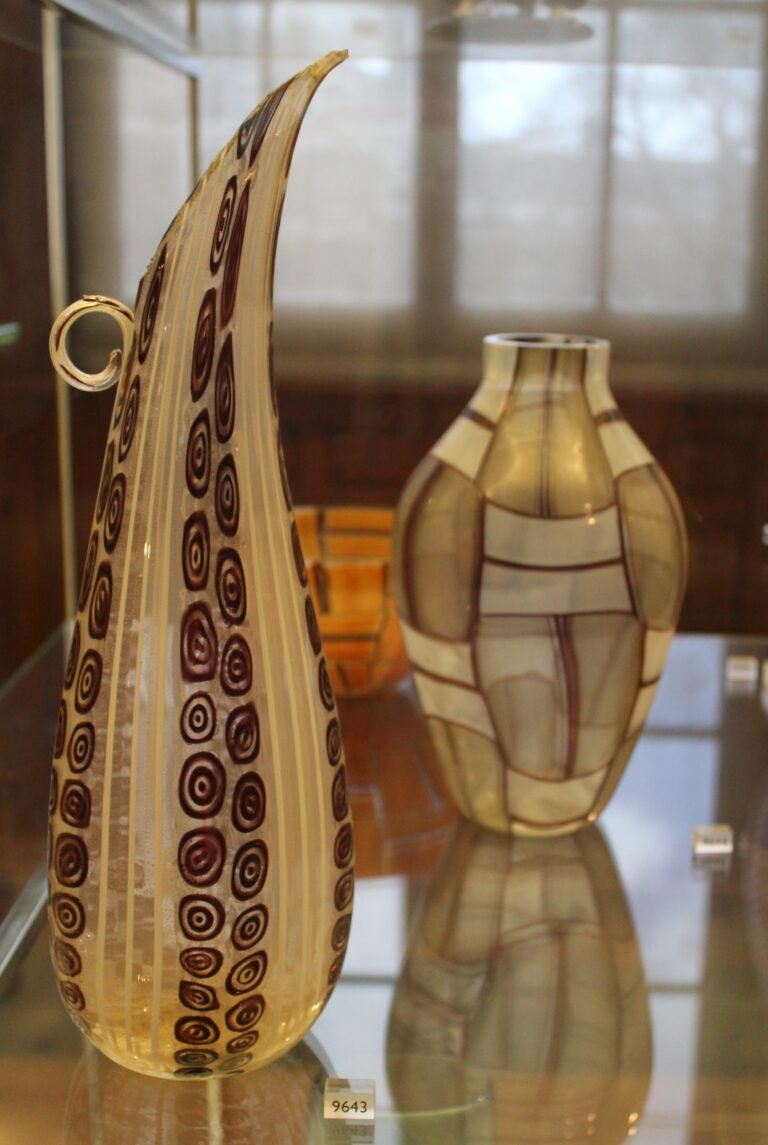
Saturneo and Parabolici vases by Ercole Barovier, 1951.
Scandinavian glass
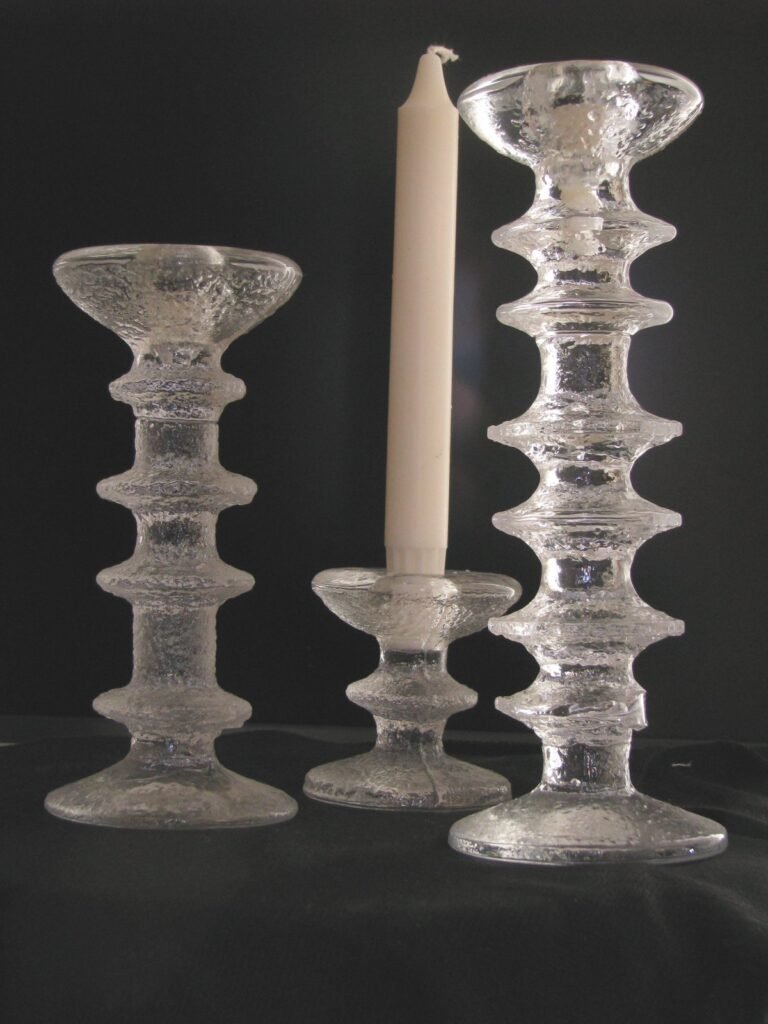
Festivo candlesticks by Timo Sarpaneva for Iittala.
Victorian & Art Nouveau
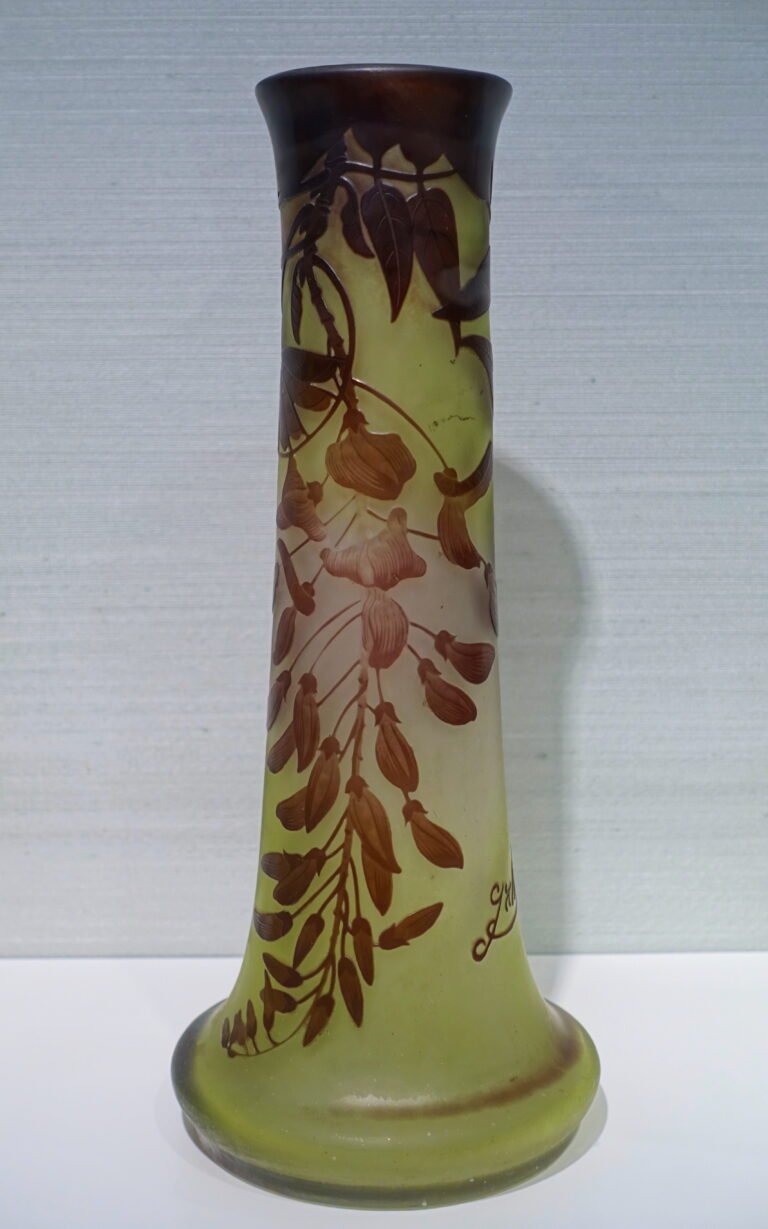
Cameo glass vase by Émile Gallé, c. 1900.
Paperweights
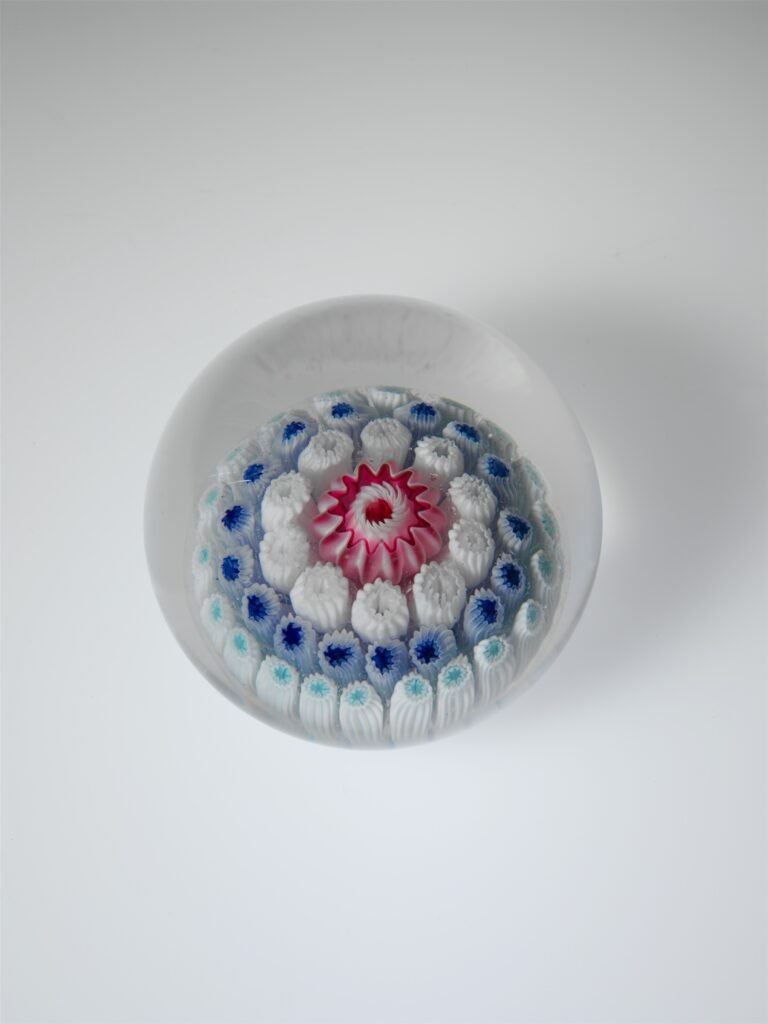
Millefiori paperweight by Gillinder & Sons.
Learn the language of glass
A handful of terms transforms your ability to research an object, and gives you the thing a beginner most lacks: a way of describing what you are looking at. In Murano glass you will quickly meet these.
- Sommerso — layers of differently coloured glass seen through a transparent outer casing.
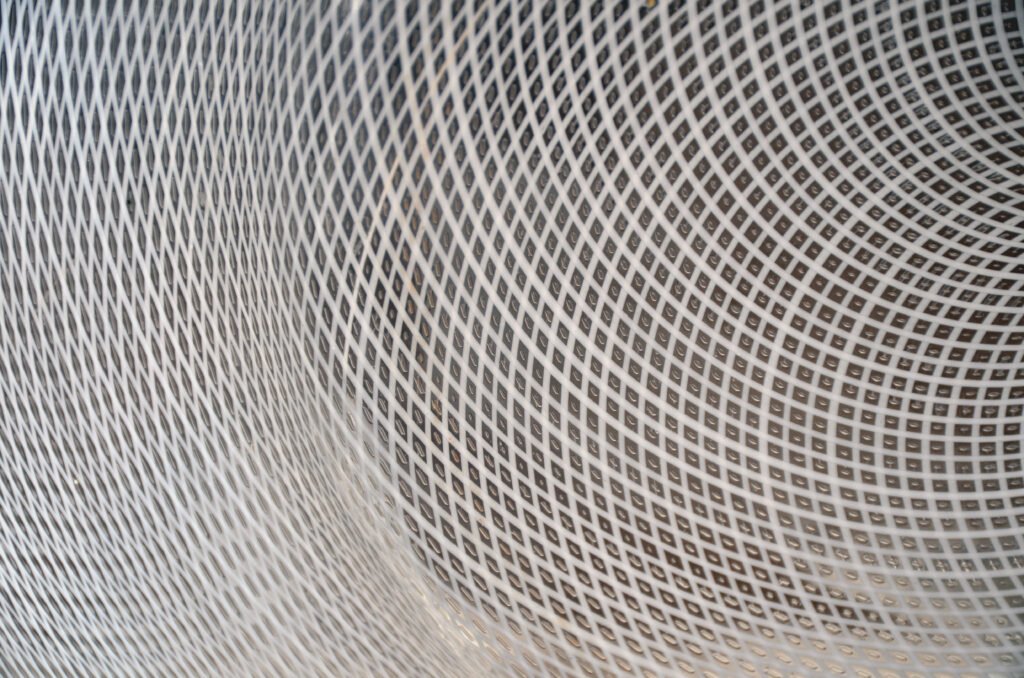
- Filigrana — fine threads or canes worked into the glass in linear patterns.
- Murrine — patterned canes sliced into sections and set into the object.
- Millefiori — literally “a thousand flowers”, canes cut across their length to give flower-like motifs.
- Battuto — the cooled surface ground or faceted into a textured, matte finish.
- Incalmo — separately blown sections joined together, usually as bands of contrasting colour.
Start small
You do not need thousands of pounds, and I would argue against spending a large amount on a first piece. Fifty to two hundred pounds is enough: a small paperweight, a vintage Scandinavian vase, a decent sommerso object, a piece of British studio glass. The purpose of a first purchase is education, not investment.
Identify it, and be careful with attribution
Say you find a colourful vase at £150, described only as “vintage Italian glass”. Rather than buying on the spot, investigate. Look at the shape, the colours, the decoration, the base and any label, then compare it with reference books, museum collections and auction catalogues. You may end up with a factory, a designer, even a model number, and suddenly the object has a history.
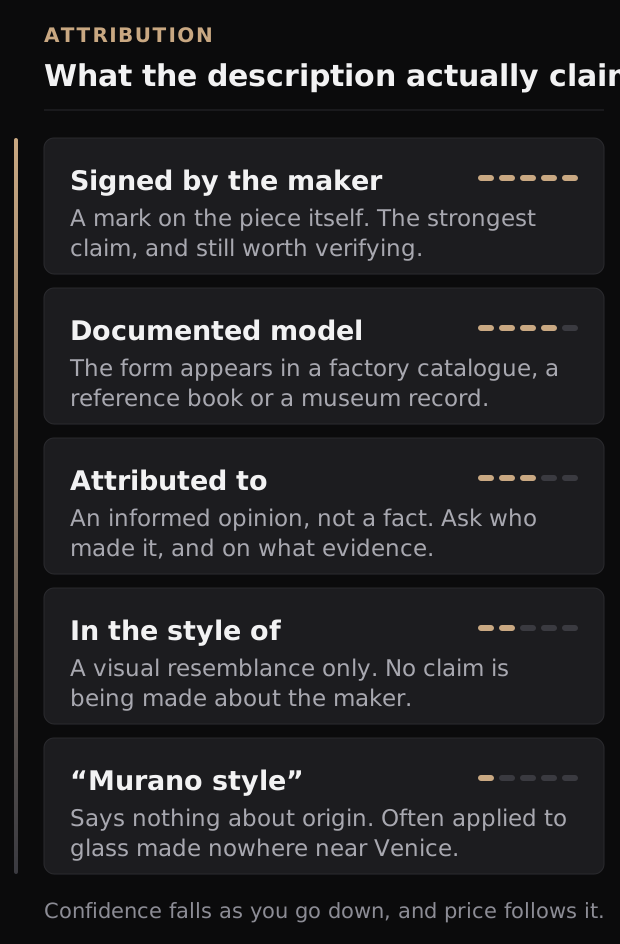
Be strict about the language sellers use, because there is a hierarchy of confidence behind it. Signed by the maker is not documented model, which is not attributed to, which is not in the style of; and “Murano style” means only that somebody thought it looked Venetian. Those distinctions move both desirability and price.
Check the base, then check the condition
Never judge a piece from the front alone. The base carries factory labels, signatures, engraved marks, pontil marks and the evidence of polishing or alteration. A good seller will send detailed photographs of it, and reluctance is a reason to slow down.
Glass can look perfect at arm’s length and still be damaged. Check for chips, fleabites, cracks, scratches, repairs, re-polishing, cloudiness and internal damage, paying particular attention to rims and protruding elements, where a small chip has a disproportionate effect on value. “Good condition” means different things to different dealers, so ask for a proper condition report on anything expensive.
Asking prices are not values
Three near-identical vases listed at £250, £750 and £1,200 do not tell you the vase is worth £1,200. Those are asking prices. Completed auction sales are the better guide: what a piece made, when, its size, condition and provenance, and whether the figure includes buyer’s premium. Follow enough of them and a sense of fair value builds on its own.
Where to buy
- Antique shops let you handle the object and talk to the dealer.
- Antique fairs let you compare many dealers and styles in a single visit.
- Auction houses often give the best prices, once you understand premiums, postage and condition reporting.
- Specialist dealers cost more, but bring expertise, provenance and confidence.
- Online marketplaces produce bargains, but demand considerably more research.
As a beginner, use auction houses and specialist dealers for anything expensive, and online marketplaces to learn how the market behaves.
Keep a record
Even with two or three pieces, start a record: maker, manufacturer, country, approximate date, technique, dimensions, condition, provenance, where you bought it, what you paid, when, your sources and photographs. It feels excessive at £100 and entirely sensible at £1,000. After a few years it becomes your own collecting archive.
Where to actually start
Visit somewhere without intending to buy. Photograph what interests you where permitted. Research the makers, techniques and periods that keep pulling you back, choose a broad direction, then buy one piece at £50 to £200 and research it properly. Start following auction results, and let your budget rise with your knowledge.
Avoid chasing investment pieces at the beginning. Markets move, trends move, and authentication is difficult. With £500 you would learn more from a £100 paperweight, a £150 Scandinavian vase and a £250 identified piece of Italian glass than from a single £500 vase, because three objects can be compared on technique, period, colour, form and price.
A beginner’s buying checklist
- The object. Do I like it, is it the kind of glass I want to collect, and is it an interesting example?
- Identification. Who made it, who manufactured it, when, and is the attribution documented?
- Condition. Chips, cracks, repairs, re-polishing?
- Provenance. Where has it come from, is there a label, and will the seller support what they claim?
- Price. What have comparable pieces sold for, is this an asking price or a completed sale, and what is my limit?
If several of those come back blank, do not feel pressured. Save the listing, photograph the object, and research it later. There is no single right way to collect glass, so let the collection grow out of your own curiosity. Your first piece does not need to be rare or expensive. It only needs to make you want to know more.
Image credits
Every photograph on this page is in the public domain or released under a CC0 public-domain dedication, so no permission was required and no attribution is owed. The list below is kept as a record of where each image came from, so its provenance travels with the article.
- Heading image, Pezzato vase by Fulvio Bianconi: Pezzato by Fulvio Bianconi, V&A London by 14GTR, via Wikimedia Commons, CC0 1.0. Resized for the web.
- Italian art glass, Saturneo and Parabolici vases: Saturneo and Parabolici vases, V&A London by 14GTR, via Wikimedia Commons, CC0 1.0. Resized and cropped to 3:4.
- Scandinavian glass, Festivo candlesticks: Sarpanevan kynttilänjalat by Otto-Ville Mikkelä, via Wikimedia Commons, released into the public domain. Resized.
- Victorian and Art Nouveau, cameo vase by Émile Gallé: Vase, Emile Galle, c. 1900, Hessisches Landesmuseum Darmstadt by Daderot, via Wikimedia Commons, CC0 1.0. Resized and cropped to 3:4.
- Paperweights, millefiori weight by Gillinder & Sons: Paperweight MET DP208398, The Metropolitan Museum of Art Open Access, via Wikimedia Commons, CC0 1.0. Resized.
- Filigrana a reticello: Murano Glass Museum, filigrana a reticello by Vassil, via Wikimedia Commons, CC0 1.0. Resized for the web.
- The diagram showing the hierarchy of attribution is original work, drawn for this article.