
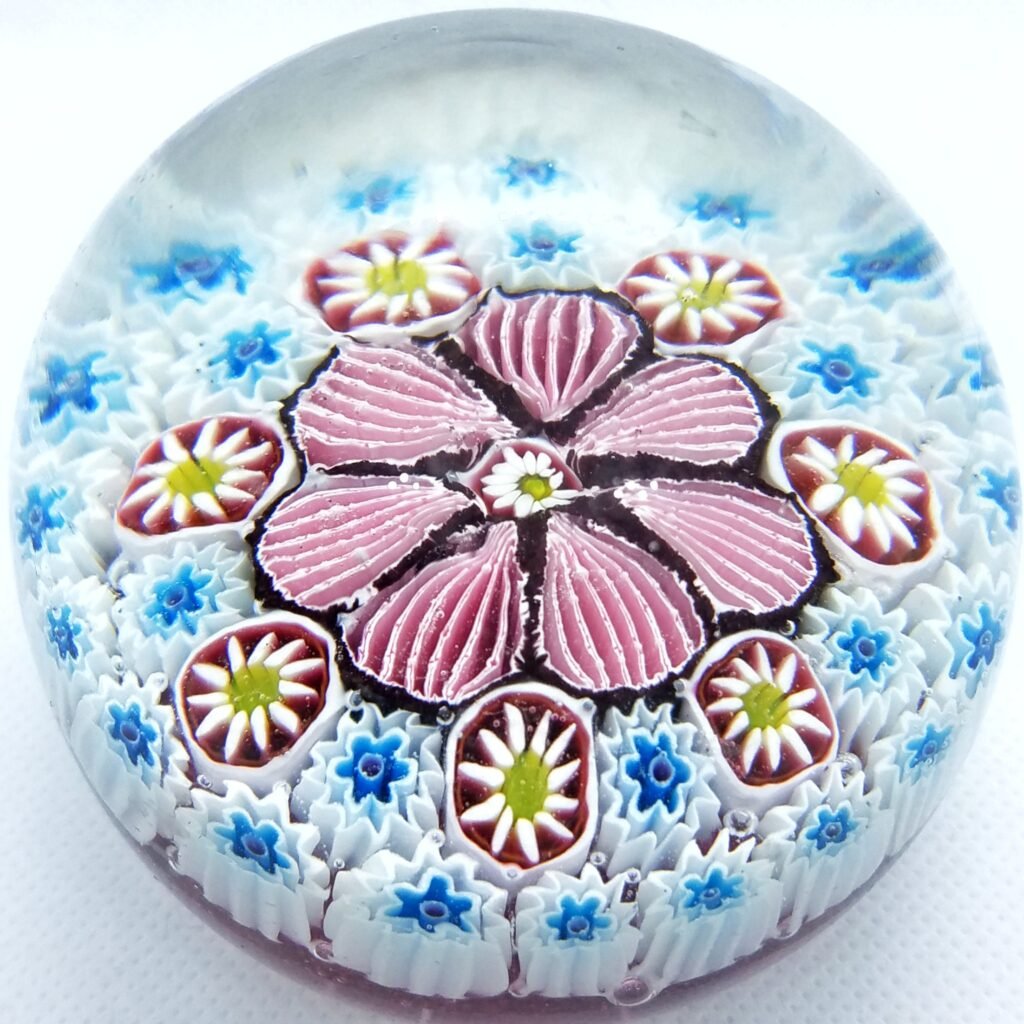
A paperweight is bought with the eye and identified with the hand. You turn it over. The base tells you almost as much as the dome does: a ground pontil, a polished pontil, a cut star, each one a record of how the piece was finished. Finishing habits cluster by house and by decade far more consistently than the canes on top.
What the pontil actually is
The pontil is the scar left where the glass was held on an iron rod while the maker worked the rest of the piece. Every blown or worked glass object has one somewhere, and what happens to that scar afterwards is a deliberate choice, not an accident of process.
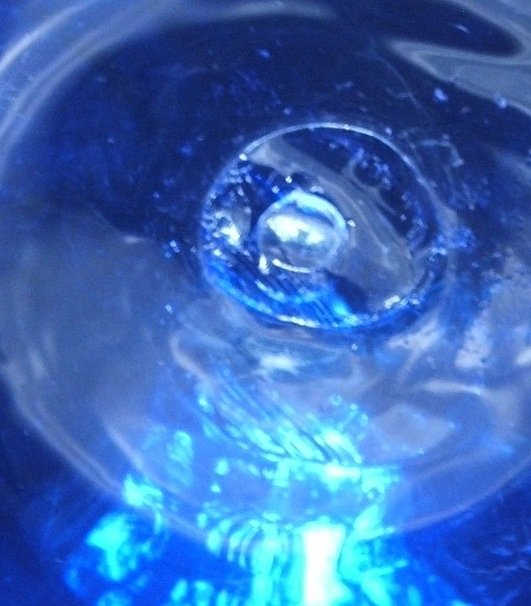
A rough, unfinished pontil suggests either an early piece or a workshop that did not treat the underside as part of the object. A neatly ground and polished pontil, flush with the base, points towards houses that did. Ground flat, polished, left rough, concave or shallow: the finish is a habit rather than a decision, and habits belong to workshops. Workshops can sometimes be named.
The base is a signature written in a language most collectors never learn to read.
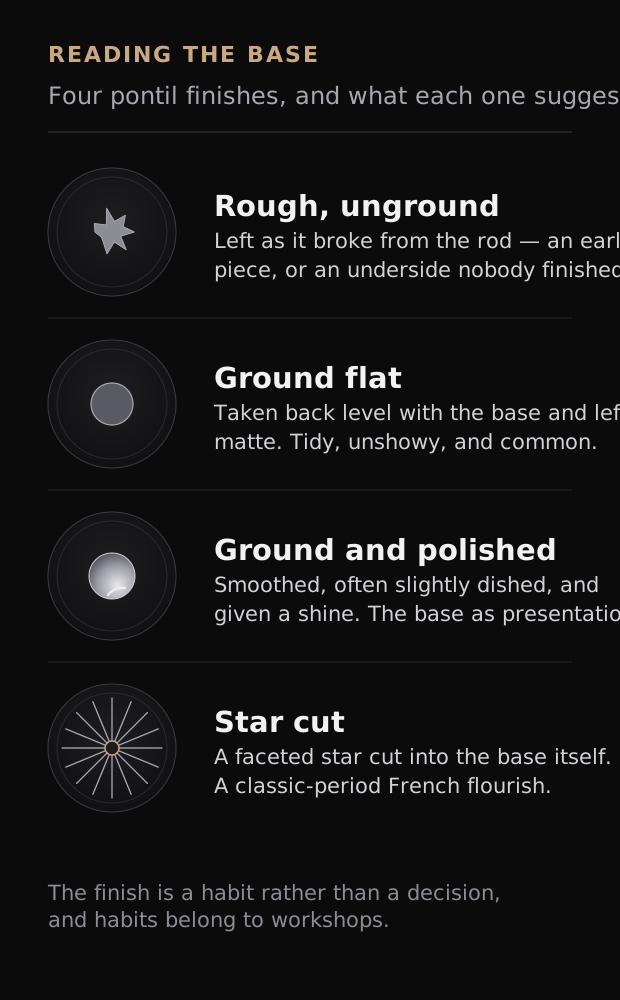
Reading a cut star base
Some classic-period French weights carry a faceted star cut into the base itself, a flourish that turns the underside into a second, smaller composition. Its presence, its size and its symmetry are all worth noting before you turn the piece back over.
The signature cane
Some makers set a tiny initialled cane into the design, often near the base and often easy to miss. The PY cane of Paul Ysart is the best-known British example. When one is present, an attribution moves from inferred to documented.
Its absence proves nothing. Signed and unsigned weights came out of the same hands on the same days.
What the base cannot tell you
It cannot date a weight to a year, it cannot confirm a factory on its own, and it cannot make an unattributed object attributable through sheer wishful looking. The most useful thing a base often says is not enough information, which is an answer, and a better one than a guess.
None of this replaces looking closely at the canes. But a base examined first, before the dome has a chance to charm you, keeps the rest of the assessment honest.
Further reading
Image credits
The photographs on this page are borrowed. Both are in the public domain, so no permission or credit is required; they are listed here because this site keeps a record of where every image came from.
- The paperweight at the head of the article: Glass paperweight, maker unknown, probably late 1800s by Daderot, via Wikimedia Commons. Public domain (CC0). Resized.
- The pontil scar: Punt scar on the base of a free-blown glass bowl by Douglas W. Jones, via Wikimedia Commons. Public domain. The diagram of base finishes is original work made for this site.