
What exactly is a glass paperweight?
The glass paperweight developed as a decorative object during the mid 19th century. From around 1845, European glassmakers, particularly in France, began producing large numbers of sophisticated paperweights. They were both functional and decorative, designed to hold papers in place while showcasing remarkable craftsmanship.
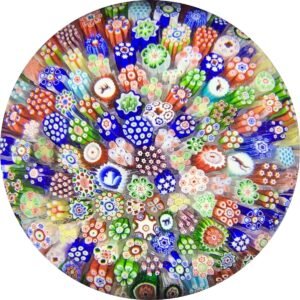
Techniques such as millefiori (using patterned glass canes), lampwork (individually worked glass elements) and subjects (encased figures) create miniature worlds trapped in glass.
The result is a small object with surprising complexity, and infinite variety.
Start by learning the basic types
Familiarise yourself with the main types of paperweights you will encounter. Understanding the techniques will help you identify and appreciate them.
Millefiori
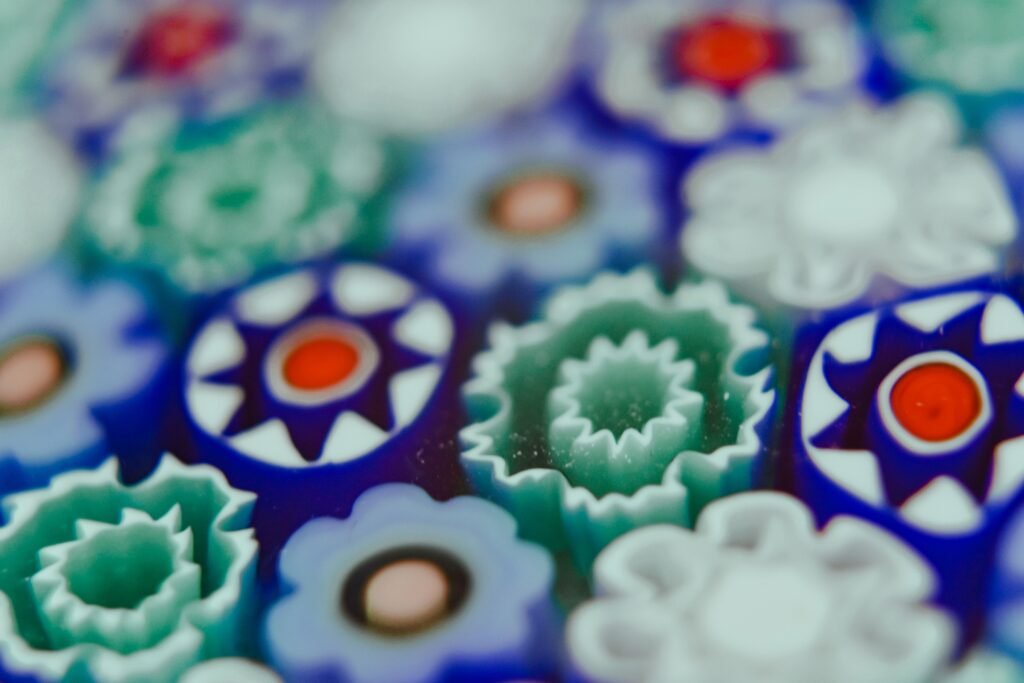
Made using thousands of tiny patterned glass canes arranged in designs, often in concentric circles or geometric patterns.
Lampwork (Floral)
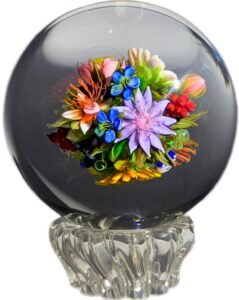
Flowers, plants and objects individually shaped in glass to create three-dimensional scenes inside the paperweight.
Sulphides
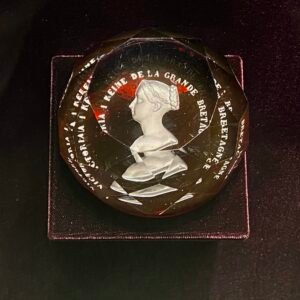
A figure, often historic, literary or commemorative, encased within the glass, made from porcelain or glass.
Learn to identify the base
The base of a paperweight can provide important clues about its age, maker and quality.
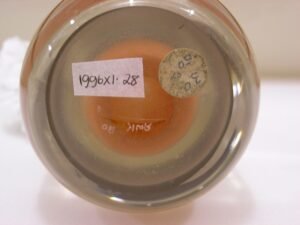
Look for pontil marks, polishing, cutting, engraving, labels, signatures and other marks. However, do not assume a mark automatically proves who made it. Experience and comparison with documented examples are essential.
Always photograph the top, side and base.
Use museums as your visual classroom
Museums hold exceptional examples with detailed cataloguing. Use them to learn.

The Corning Museum of Glass says its collection contains more than a thousand paperweights, from the earliest mid 19th century examples through to modern work.
Study the catalogue descriptions. They show you how specialists record maker, date, place, materials, technique and provenance.
Keep records from your first purchase
Good records build knowledge and add value to your collection.
This habit from the beginning will help your research, and may be invaluable in the future.
The real secret to becoming a good collector
It is not about spending the most money. It is about curiosity, research and appreciation.
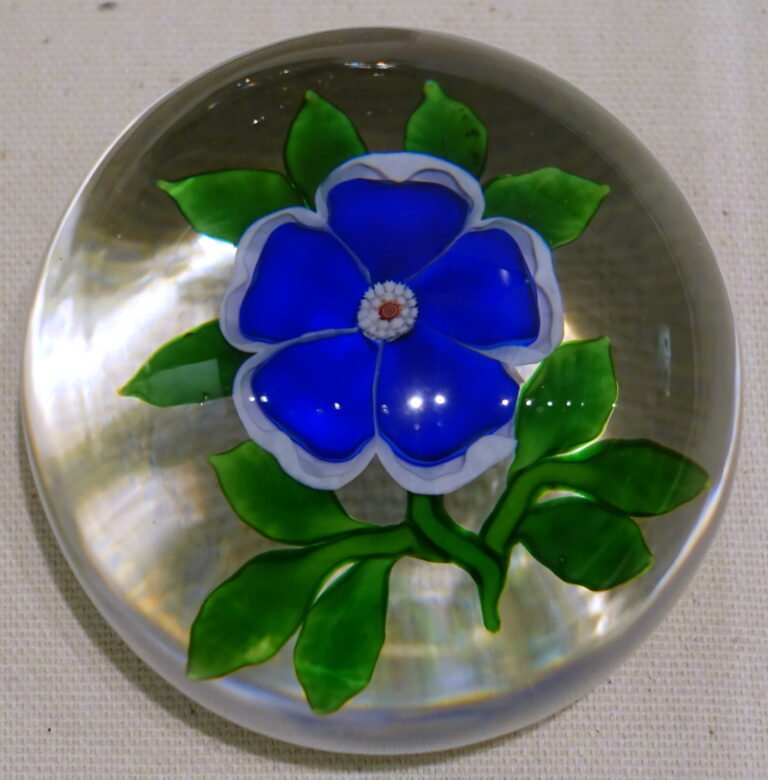
A paperweight can be beautiful on its own. But when you understand its story, how it was made, who made it, when and why, it becomes something even more special.
Start with what you love, keep learning and enjoy the journey.
Further reading
- Understanding millefiori
- How to identify a glass paperweight
- Reading the base: pontils, polish, and stars
- What makes a paperweight valuable
Image credits
The photographs on this page are used under the licences listed below. A Creative Commons licence allows a work to be shared and adapted, provided appropriate credit is given, a link to the licence is provided, and any changes are indicated. Where an image has been resized or cropped to fit this page, that is noted.
- Millefiori canes (heading image and the millefiori panel): Set of colorful decorative elements of millefiori by Diana, on Pexels. Pexels licence. Cropped.
- Close-pack millefiori paperweight: Antique Baccarat Closepack Millefiori Paperweight by Lesbeatiques, via Wikimedia Commons, CC BY-SA 4.0. Cropped to a square.
- Lampwork paperweight: Ken Rosenfeld Lampwork Orb Paperweight by Lesbeatiques, via Wikimedia Commons, CC BY-SA 4.0. Resized and cropped.
- Sulphide paperweight: Glass paperweight with sulphide bust of Queen Victoria by Andre Carrotflower, via Wikimedia Commons, CC BY-SA 4.0. Cropped to a square.
- The base of a paperweight: Paperweight (AM 675540-3), a 1980 weight by Tony Kuepfer. Auckland War Memorial Museum Tamaki Paenga Hira, via Wikimedia Commons, CC BY 4.0. Resized.
- The Corning Museum of Glass: Corning Museum of Glass, Corning, New York by Carol M. Highsmith, Library of Congress. Public domain. Resized.
- The blue flower weight: Paperweight by Cristallerie de Baccarat, France, c. 1850, an exhibit in the Currier Museum of Art, via Wikimedia Commons. Public domain (CC0), no attribution required. Resized.